

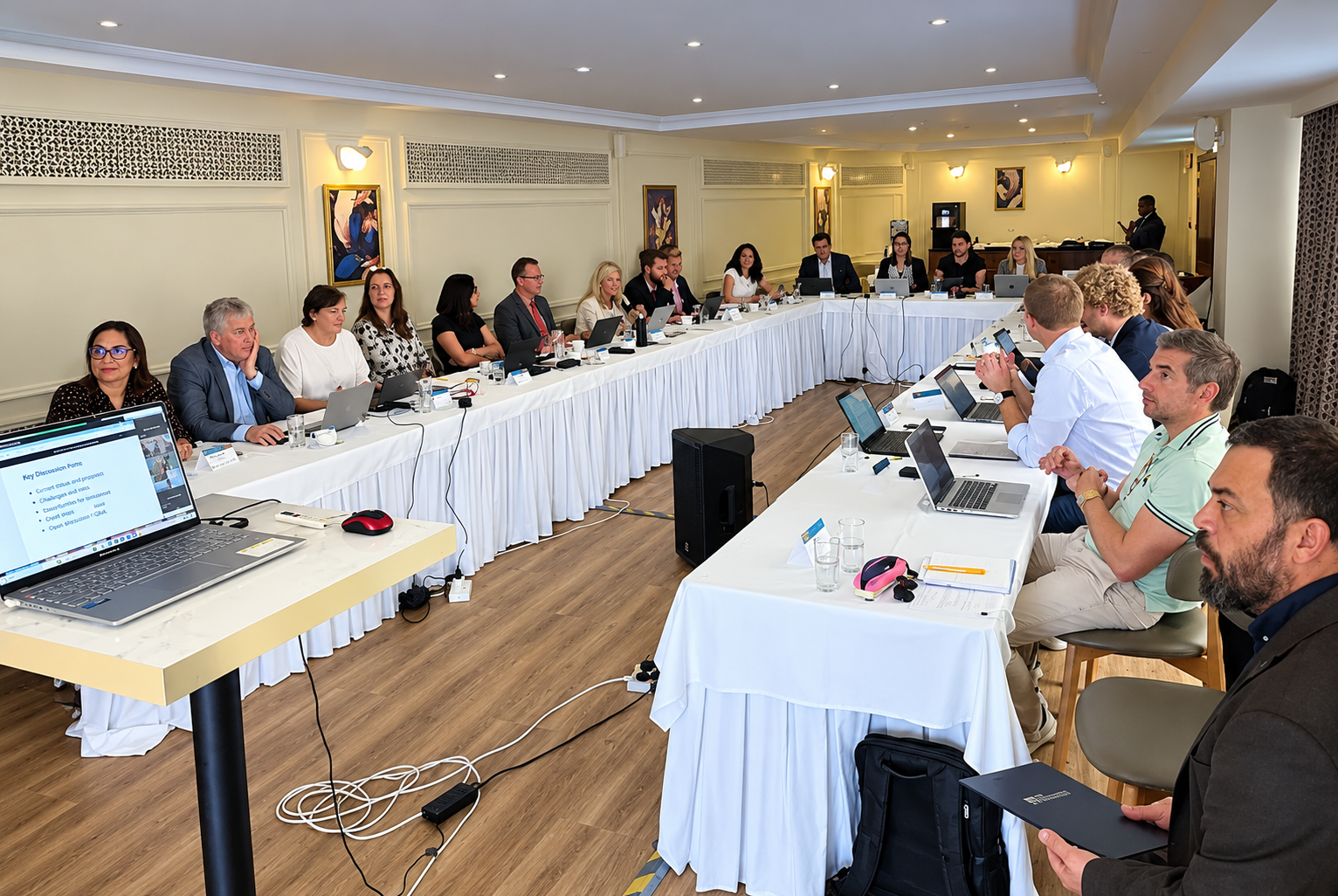
The Malta Further & Higher Education Authority (MFHEA) hosted the 5th meeting of the Thematic Peer Group on Social Dimension (TPG D), held in Malta and online. Representatives from across the European Higher Education Area (EHEA) took part.
Taking Stock Since 2024
The meeting focused on progress since 2024 in implementing the social dimension commitments across the EHEA. Participants also discussed how to reflect this progress in the 2027 Bologna Process Implementation Report (BPIR).
The Bologna Process Implementation Reports provide qualitative information and statistics on all the main Bologna policy areas. A dedicated working group prepares them together with Eurydice, Eurostat and Eurostudent. This builds on earlier TPG D work: at its 3rd meeting in Oxford, the group discussed proposed indicators for monitoring the social dimension in the 2027 BPIR.
The EHEA Secretariat updated the group on the work of other BFUG working structures. Participants also heard an update on the INSPIRE project’s progress.
From Data to Policy
Discussions continued with the Peer Learning Activity “From Data to Policy: Monitoring the Social Dimension of Higher Education“. The activity examines how evidence and data can better support policies that make higher education more inclusive, equitable, and responsive to the diversity of its students.
The theme states that reliable data is a necessary precondition for evidence-based improvement of the social dimension, and that countries need the capacity to collect, process, and use such data.
What the TPG D Does
TPG D is one of four Thematic Peer Groups in the EHEA 2024–2027 Work Programme. The other three cover qualifications, recognition and quality assurance. The Bologna Follow-Up Group (BFUG) adopted the Work Programme in Budapest in September 2024. The group provides peer support for implementing the Principles and Guidelines to Strengthen the Social Dimension of Higher Education in the EHEA. Malta (through MFHEA) is a member of TPG D and of the other BFUG working structures in this work programme.
Why the Social Dimension Matters
The social dimension has been a cornerstone of the EHEA since its early days. In the 2007 London Communiqué, ministers agreed that the student body entering, taking part in and completing higher education at all levels should reflect the diversity of society.
In 2020, the Rome Communiqué adopted the Principles and Guidelines and set the aim of an inclusive EHEA by 2030. It also broadened the definition of the social dimension to include creating an inclusive environment that fosters equity and diversity and responds to local communities’ needs.
In 2024, at the Tirana Ministerial Conference, ministers endorsed Indicators and Descriptors for the Principles and Guidelines to support their implementation and monitoring.
Looking Ahead to 2027
Participants discussed the TPG D’s contribution to the 2027 Ministerial Communiqué, looking at priorities and directions that could further strengthen the social dimension. This is part of wider preparations for 2027: the Tirana Communiqué asked the BFUG to submit proposals in 2027 for the main priorities of the Bologna Process.
MFHEA’s Commitment
MFHEA has a long-standing role in this area. In April 2022, it hosted the 5th meeting of the BFUG Working Group on Social Dimension in Malta, which focused on developing social dimension indicators. At national level, the National Strategic Plan for Further and Higher Education 2022–2030 recommends that MFHEA set up a dedicated working group to co-design a policy approach on the social dimension.
MFHEA thanks all participants, in Malta and online, for their contributions.