


Behind every qualification is a story. It may represent years of study, determination and hard work, and for many people, it marks an important step towards a new opportunity, whether that means continuing their studies, starting a career or having their professional achievements recognised.
This is why the integrity of qualifications matters.
As qualifications move across borders, recognising them can sometimes be complex. Different countries have different education systems, institutions and ways of issuing qualifications. In most cases, this is a matter of understanding those differences and finding the right information. But there are also situations where documents may have been altered, information may be misleading or claims about a qualification may not be supported by the available evidence.
Recognising these situations requires more than simply looking at a certificate. It takes experience, careful assessment and a good understanding of international education systems.
This is one of the areas in which the Malta Qualifications Recognition Information Centre (MQRIC) continues to strengthen its expertise. As part of this work, MQRIC recently held discussions with Mr Samir Gabro, MSc, Senior Credential Evaluator at the Swedish Council for Higher Education and part of the ENIC-NARIC Sweden network.
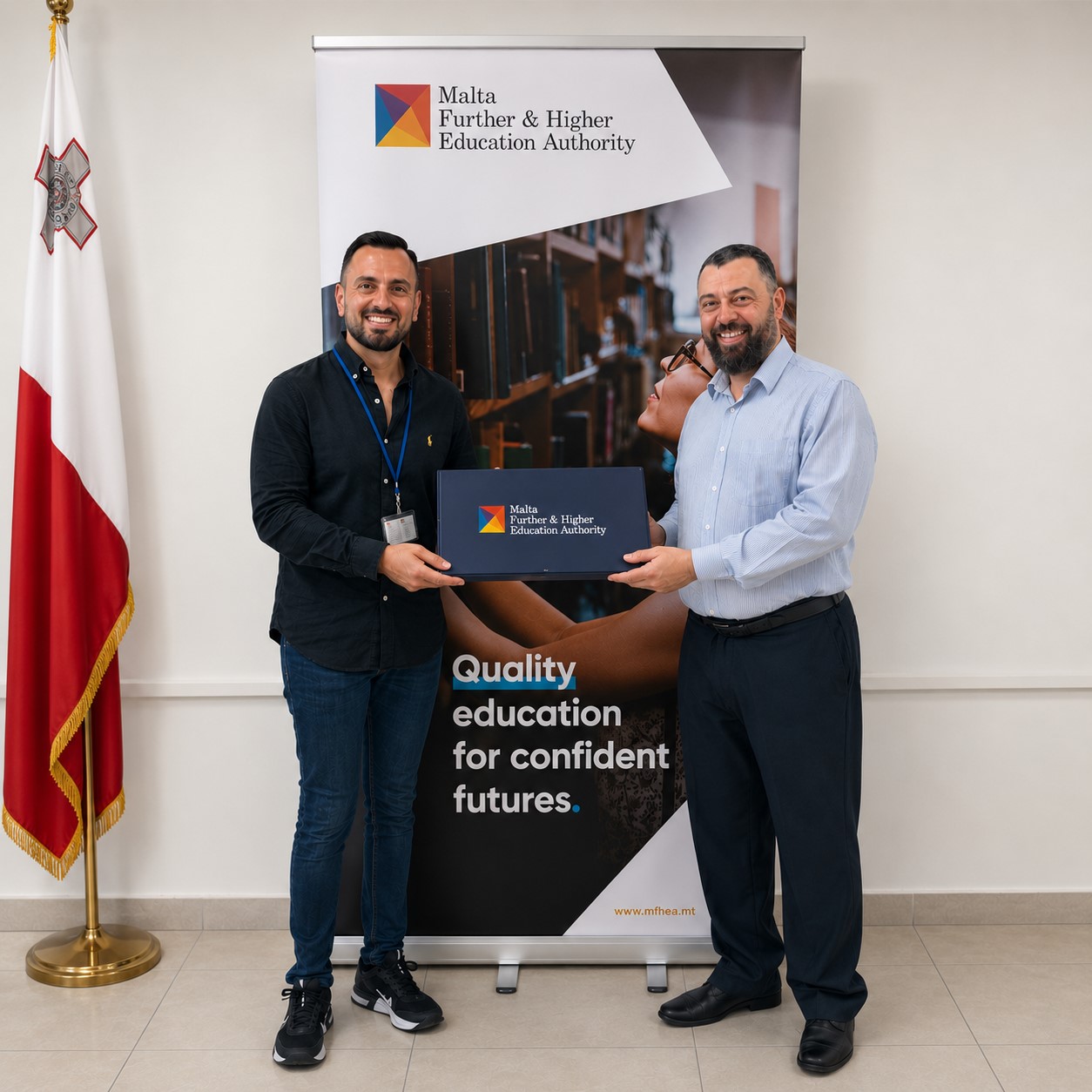
The discussions focused on sharing knowledge and exploring opportunities for specialised training, particularly in relation to identifying and assessing potentially fraudulent or misleading qualifications.
Mr Gabro brings valuable experience in international credential evaluation, and his expertise has also been recognised internationally. He is a 2026 recipient of the IERF Sepmeyer Award for Excellence in Credentials Evaluation Research, recognising his research on the assessment of credentials from Algeria and Libya.
His experience provided an opportunity to discuss some of the practical challenges that qualification recognition professionals encounter when assessing credentials from different countries and education systems.
One area explored was how to identify common indicators that may point to qualification fraud. This can include inconsistencies in documentation, questions surrounding an awarding body’s status, or information about a qualification that does not match what can be established through reliable sources.
Another important area is the way qualification levels are presented.
The Malta Qualifications Framework (MQF) and the European Qualifications Framework (EQF) provide important reference points for understanding qualifications and their levels. Ensuring that references to these frameworks are accurate and supported by evidence is an important part of maintaining confidence in the qualification recognition process.
The proposed training would take a practical approach to these issues. Alongside specialised input, staff would have the opportunity to work through case studies and consider different scenarios they may encounter in their work. Discussions also included the possibility of institutional exchanges, providing an opportunity to learn more about how ENIC-NARIC Sweden approaches cases involving false, altered or misleading credentials.
This kind of knowledge-sharing is important because qualification recognition is not always about finding a simple answer. Sometimes, it means asking more questions, checking information with different sources and looking at a qualification within the wider context of the education system in which it was awarded.
Learning from colleagues in other countries can help strengthen this process. It allows professionals to share experiences, discuss challenges and learn about approaches that may be useful in their own work.
There is also a very human side to this work.
For a student or graduate, having a qualification recognised can be an important moment in their academic or professional journey. They deserve to know that their hard earned achievements will be assessed fairly and carefully. At the same time, employers, professional bodies and education institutions need to be able to trust the qualifications presented to them.
Protecting that trust is a shared responsibility.
International cooperation can play an important role in meeting this responsibility. Qualifications are increasingly international, and the challenges surrounding their recognition can be too. Strong professional networks allow recognition centres to share knowledge and respond more effectively to emerging issues.
For MFHEA, strengthening our capacity in this area is part of our wider commitment to maintaining confidence in Malta’s further and higher education system.
The discussions with Mr Gabro are one example of how collaboration and professional exchange can support this work. By continuing to develop expertise, share good practice and learn from international partners, we can strengthen the processes that help ensure qualifications are assessed accurately and consistently.
Ultimately, safeguarding the integrity of qualifications is about protecting something that matters to everyone involved: trust.
Trust that a qualification represents what it says it represents. Trust that genuine achievements are recognised fairly. And trust that the systems supporting qualification recognition continue to uphold the standards expected of Malta’s further and higher education sector.