

What is required to ensure Malta’s education system reaches excellence and meets international standards? The MFHEA’s 2025 Annual Report offers a detailed answer, showcasing thousands of qualification recognitions, major accreditation successes, and an increasing role in European education.
In 2025, the Malta Further and Higher Education Authority continued to fulfil its core mission: to foster the development and achievement of excellence in further and higher education in Malta through research, effective licensing, accreditation, quality assurance, and recognition of qualifications established under the Malta Qualifications Framework.

Here is a look at the milestones that defined the year.
A Record Year for Qualifications Recognition
One of MFHEA’s most important functions is the work of the Malta Qualifications Recognition Information Centre (MQRIC), which is also Malta’s designated ENIC/NARIC centre. Through the Malta Qualifications Framework (MQF) and the European Qualifications Framework (EQF), MQRIC ensures the comparability and recognition of qualifications and provides guidance on local and international credentials.
In 2025, MQRIC received 16,177 applications, of which 16,053 were processed and communicated to applicants. A fast-track procedure that delivered recognition statements within two working days was used for 1,005 applications.
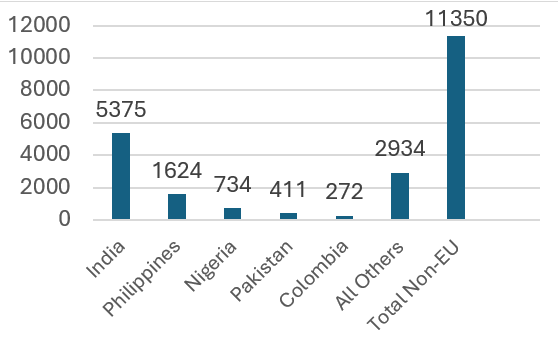
The geographic spread of applicants was broad and diverse, with 11350 applications coming from non-EU countries and 4827 from EU. India topped the list of non-EU applicants with 5,375 applications, followed by the Philippines (1,624), Nigeria (734), Pakistan (411), and Colombia (272). Among EU nationals, Maltese citizens submitted the highest number of applications (3,699), followed by Italian (437), French (86), Spanish (82), and Polish (80) nationals. The data reflect MQRIC’s growing importance as a tool for both inbound professionals and resident Maltese seeking recognition of formal qualifications.
The online recognition system was further enhanced to enable more precise assessments based on the date of award, allowing evaluators to apply different recognition statuses to the same programme when its accreditation status has changed over time.
MQRIC also participated in the 32nd Annual Joint Meeting of the ENIC and NARIC Networks, held in Tirana, Albania in May 2025, bringing together around 150 participants from 43 centres to advance international recognition practices.
Mutual Recognition of Professions: Facilitating Mobility Across Europe
The EU Affairs and Mutual Recognition of Professions (MRC) Unit is essential to facilitating the free movement of professionals across the EU by enforcing EU Directive 2005/36/EC on the recognition of professional qualifications. The unit is responsible for maintaining an active network to facilitate the continuous flow of information from the European Commission to the Designated Authorities, providing instructions and ensuring that corrective actions are implemented promptly and effectively.
In 2025, the unit was active in multiple areas.
A major milestone was the near-completion of the migration of the Regulated Professions Database (REGPROF) to the Internal Market Information System (IMI), officially finalised in July 2025. This upgrade simplifies the way data from regulated professions is recorded and accessed across EU Member States, easing administrative burdens for professionals and authorities.
The unit also intensified efforts around the Proportionality Test Directive, formally submitting three proportionality test conclusions in 2025, while working with multiple Competent Authorities on new tests. Progress was also made on Common Training Frameworks – particularly for physiotherapy – which aim to harmonise training standards for specific professions across the EU.
The unit actively participated in various meetings throughout the year. Officers attended and followed up on the information provided at all Group of Coordinators (GOC) meetings organised by the European Commission. The meeting played a key role in enabling the Unit to directly participate in and contribute to ongoing initiatives in partnership with the European Commission.
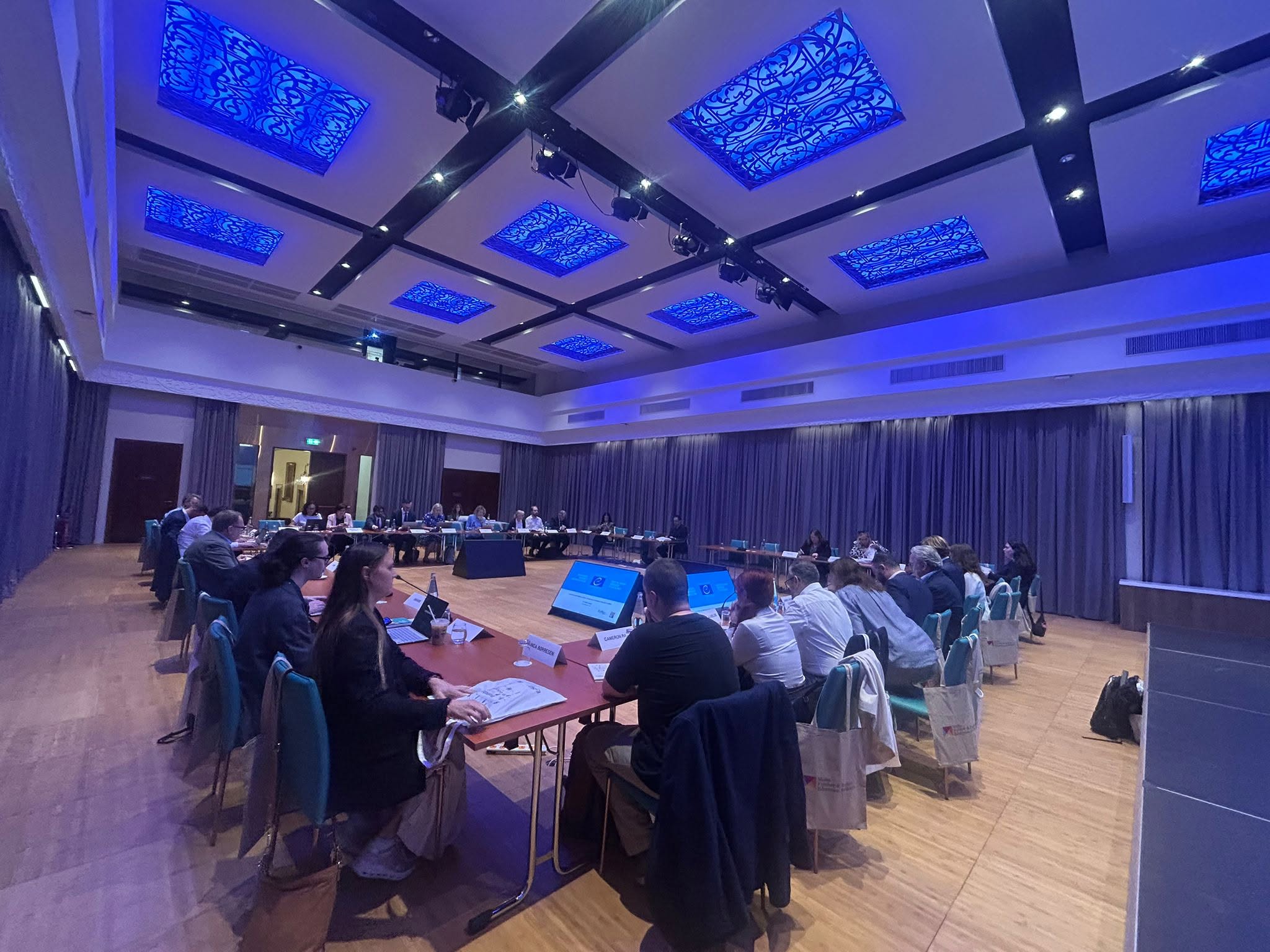
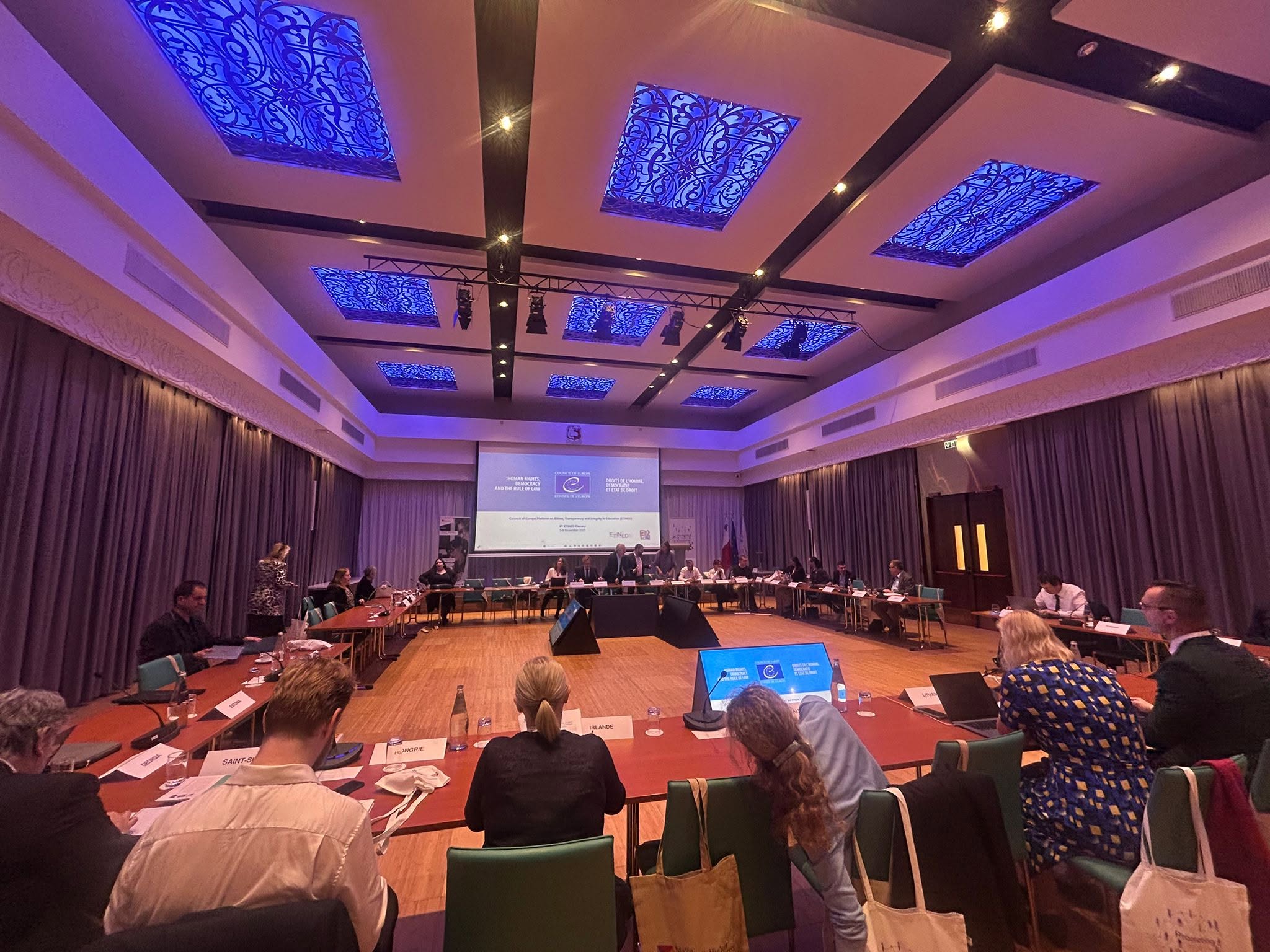
The unit also played a key role in organising the 9th ETINED Plenary (the Council of Europe’s Platform on Ethics, Transparency, and Integrity in Education) held on November 5–6, 2025, at the Aula Magna of the University of Malta. The event brought together delegates from across Europe to tackle educational fraud, develop guidelines for open school data, and establish a new Centre for Preventing and Countering Education Fraud, established through a Memorandum of Understanding between the Council of Europe and CIMEA.
Accreditation: Raising the Standard for Higher and Further Education
Structural Reform of the Department
In 2025, the Licensing, Accreditation, Quality Assurance and Validation Department undertook a comprehensive restructuring, largely in response to recommendations from an ENQA (European Association for Quality Assurance in Higher Education) external review conducted in 2023. The core change was a formal separation into two distinct units: the Higher Education Unit and the Further Education Unit, ensuring that quality assurance processes are appropriately tailored to each sector’s distinct needs, scale, and applicable European frameworks.
Higher Education: New Standards and Pilot Accreditation
The Higher Education Unit finalised and published the Programme Accreditation Standards for Higher Education (covering MQF Levels 5–8) after a structured public consultation and refinement with external experts. These standards are explicitly aligned with the European Standards and Guidelines (ESG), enhancing consistency and academic integrity across the sector.
A piloting phase was launched in summer 2025, selecting four programmes (two re-accreditations and two initial accreditations, one at each of MQF Levels 5, 6, 7, and 8) to test the new standards in practice. This pilot is due to run throughout 2026, with full implementation expected towards the beginning of 2027.
The unit also finalised the Regulations for Quality Assurance: Higher Education Online Learning (2025), the first dedicated regulatory framework for programmes delivered fully or partially through online modalities at MQF Levels 5–8.
Training was central to the rollout of new standards: six training sessions were held for providers and peer reviewers following the launch of the new Programme Accreditation Standards in July 2025. A total of 49 experts from 22 countries participated in the online workshops for peer reviewers held in December 2025.
In terms of programme accreditation, a total of 140 programmes were accredited at the higher education level in 2025. Of these, six did not meet the required criteria, and two appeals were submitted. Additionally, 13 external quality assurance audits for licence renewal were completed, 21 were initiated, and 2 new licences were issued to higher education provider
Further Education: Dedicated Standards for VET
The Further Education Unit formally initiated its own activity in 2025, recognising the distinct regulatory, operational, and European framework context of Vocational Education and Training (VET). A major undertaking was the development of new Programme Accreditation Standards for Further Education, aligned with the European Quality Assurance Reference Framework for VET (EQAVET). A webinar presenting these standards to Further Education providers was organised in December 2025, with the document to be made available.
In 2025, 100 programmes were accredited, covering MQF Levels 1–4. At the provider level, 11 new licences were granted, with five external quality assurance audits finalised and the remaining fivestill in progress.
Validation of Non-Formal and Informal Learning (VNFIL): Recognising the Full Picture
The VNFIL Unit continued to strengthen Malta’s framework for recognising skills and knowledge acquired outside of formal education: at work, at home, or through voluntary activities. From 1 January 2025, new Quality Assurance Guidelines for VNFIL came into force, binding all validation centres with a set of standards focused on the four phases of validation: identification, documentation, assessment, and certification.
There are currently 9 active VNFIL centres across Malta: Jobsplus, ITS, TCTC, Learning Works, Astoria, MFMAC, AME, MISCO, and PDTM, all of which have renewed or new a Memorandum of Understanding with MFHEA. In 2025, the unit also approved 11 new Recognition of Prior Learning (RPL) applications, and in June 2025, launched the RPL Principles and Practices for Providers, developed in collaboration with the Scottish Credit Qualifications Framework Partnership (SCQF).
The unit conducted three international peer learning study visits during the year: in Scotland (March), Finland (September), and Sweden (October), furthering collaboration on VNFIL, RPL, and micro-credentials. These partnerships contributed to the formation of an 8-entity European consortium applying for a Horizon Project on VNFIL, RPL, and micro-credentials.
A micro-credential course on AI was developed for implementation in Q1 2026, targeting migrants and vulnerable adult learners, and directly aligned with Strategic Pillar 6 of MFHEA’s National Strategic Plan 2030 on the Social Dimension and Widening Participation.
Research and Policy: Evidence at the Heart of Education
The Research and Policy (R&P) Unit provides the evidence base for national policy and strategy while actively participating in European and international forums.
In 2025, Malta successfully completed the field phase of the EUROSTUDENT 9 round, an EU-wide survey on the social dimension of higher education, covering students’ socio-economic backgrounds, living conditions, and mobility experiences. The MFHEA R&P Unit hosted the Preparatory Seminars for EUROSTUDENT countries in February 2025, cementing Malta’s role within the seven-member EUROSTUDENT consortium.
The comparison report for EUROGRADUATE 2022 was released in 2025, and MFHEA received approval from the European Commission to carry out the upcoming EUROGRADUATE 2026 round, which monitors higher education graduate results throughout Europe.
As Malta’s EQF National Coordination Point, the R&P Unit continued to align the Malta Qualifications Framework with the European Qualifications Framework, update the MQF Referencing Report, and promote MQF accessibility for learners, workers, and employers.
The unit also established Working Groups in Q1 2025, aligned with the 2022–2030 National Further and Higher Education Strategic Action Plan, to ensure coordinated implementation across key priority areas.
Internationally, the R&P Unit holds representative positions in a broad range of networks, including Co-Chair of the EHEA Thematic Peer Group on the Social Dimension, National Representative in the Bologna Implementation Coordination Group (BICG), and member of the Advisory Board on EUROGRADUATE 2026.
Communications & Marketing: Strengthening Visibility and Stakeholder Engagement
The Communications Unit continued to strengthen MFHEA’s public presence and stakeholder engagement throughout 2025. The year saw a comprehensive multi-channel communications strategy in action: digital articles with prominent media partners, a five-episode video series produced in collaboration with FreeHour (Malta’s top youth platform) to explain MFHEA’s mandate to younger audiences, a series of targeted articles with TVM Malta, and an outdoor advertising campaign featuring bus shelters and billboards across Malta.

FreeHour Campaign

TVM Malta articles
Social media activity was consistently maintained across Facebook, Instagram, LinkedIn, and YouTube, with regular posts keeping stakeholders informed of ongoing activities.
The Communications Unit also played a central role in the organisation of several major events, including the 9th ETINED Plenary in November 2025, the “Your Skills Matter” event marking the launch of updated RPL guidance, the Certificate Ceremony for New Providers 2025, and the Online Introduction to the New Programme Accreditation Process for Further Education Institutions.
ETINED 2025
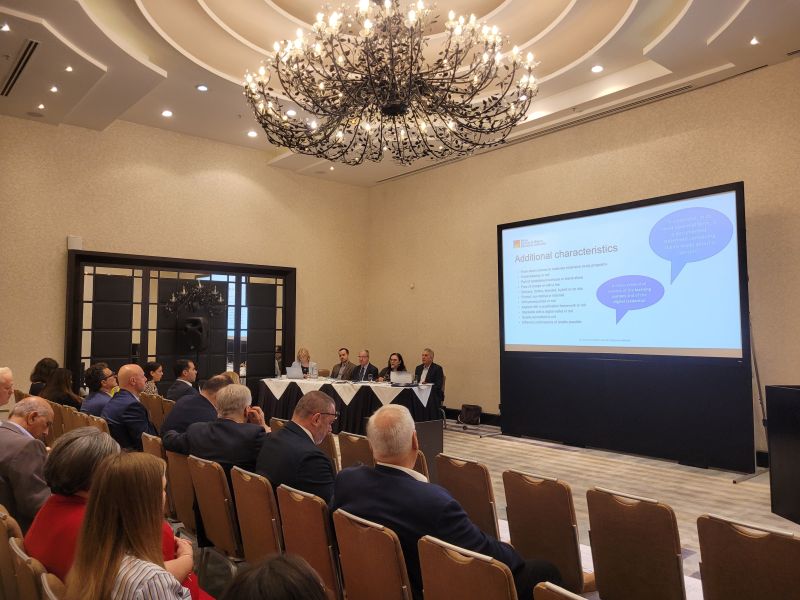
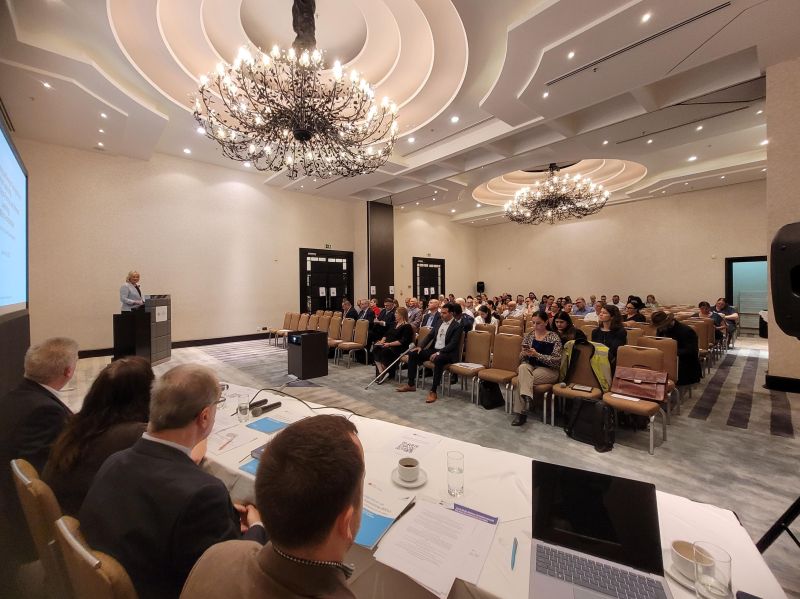
Your Skills Matter
International Engagement: Malta’s Role on the European Stage
MFHEA maintained a visible and active presence across European and international forums in 2025. Key engagements included but were not limited to:
- ENQA (European Association for Quality Assurance): Continued post-review implementation of recommendations, with structural reforms and new standards developed in response.
- Bologna Follow-Up Group (BFUG): Participation as Co-Chair of the Fundamental Values Working Group and membership in the Social Dimension, Internationalisation and Mobility, and other working groups.
- EQAVET: Participation in a peer review held in Vilnius, Lithuania (April 2025) and continued development of the CPD in VET QA Erasmus+ project, scheduled to conclude in August 2026.
- Study visit to Lund University (October 2025): An MFHEA delegation explored admissions systems, RPL methodologies, lifelong learning, digitalisation, and AI in higher education — laying the groundwork for future EU-funded collaboration.
- Horizon Project: An 8-entity consortium was formed involving universities, QA agencies, NGOs, and private sector organisations to implement a cross-European project on VNFIL, RPL, and micro-credentials.
Corporate Operations and Legal: People, Systems, and Efficiency
The Corporate Unit is the backbone of MFHEA’s day-to-day operations, covering Human Resources, Procurement, Financial Management, IT, and front-office administration. In 2025, the unit comprised a Head of Department, a Finance Manager, and eight employees, with two additional staff members joining towards the end of the year.
On the HR front, the unit facilitated 14 recruitment calls filling 22 posts, processed 21 internal promotions, introduced 8 new staff policies, and concluded a Collective Agreement for several grades in Q4 2025. Staff training was wide-ranging, covering leadership, interpersonal skills, first aid, AED use, fire safety, gender mainstreaming, and health and safety. Two induction days were organised for new employees, and seven teambuilding events were held for all staff throughout the year.
Procurement activity was substantial, with 243 processes managed across everything from IT equipment to office supplies and event logistics. The Corporate Unit also oversaw full premises maintenance — including the installation of Automated External Defibrillators (AEDs) on all three floors of the building — and supported 21 employees attending 60 international events across the year.
On the financial side, the unit processed over 2,363 transactions totalling more than €3,308,528 in payments, with strict adherence to the 30-day Late Payments Directive and continuous efforts to reduce costs through electronic payments, e-invoicing, and print monitoring.
The Legal and Compliance Unit conducted 15 spot checks and 50 online reviews of licensed providers, handled 204 compliance cases, and responded to 366 public queries. It also managed Data Protection matters and Freedom of Information requests, and represented the Authority in court litigation and licensing appeals.
This article is based on the MFHEA Annual Report 2025.
For the full report and official data, visit www.mfhea.mt. – https://mfhea.mt/annual-report-2025/